The Object in the Frame: Portrait Sessions Built Around One Thing That Matters
Most people walk into a portrait session with a bag of nerves and a vague sense that they are supposed to look natural. I get it. Standing in front of a camera is not a normal Tuesday behavior for most of us. That is why I have started asking clients a simple question before the session: is there one object you would want in the frame with you?
Not a prop. Not a Pinterest mood board. One thing that matters.
The invitation, not the assignment
I usually send this prompt a week or two before the shoot, along with a few examples so it does not feel like homework. A worn guitar pick from a first band. A grandmother's recipe card with butter stains in the corner. A kid's drawing of the family dog that looks more like a baked potato than a Labrador. A medal, a paperback, a toolbox, a shell from a trip that changed someone's mind about something.
The key is to make it optional. Some clients know immediately. Others need a few days. A few will say, I do not have anything like that, and that is a perfectly good answer. The object is a doorway, not a requirement. If we force it, the session starts to feel like show-and-tell with a lighting bill.
When a client does bring something, I ask them to tell me about it while we set up. Not a rehearsed speech. Just a few sentences. Where does it live when it is not with you? Who gave it to you? What does it smell like, if that is not a weird question? The answers tell me more about how to photograph the person than the object ever could.
Why one object changes the room
A meaningful object gives the hands something to do and the face somewhere to go. It also gives the session a quiet center of gravity. Instead of me saying, Look here, now look there, now relax your shoulders, I can say, Tell me about the last time you used this. The body follows the story.
That shift matters. Standard headshots often ask people to perform confidence. An object portrait asks them to remember something. The face does different work when it is remembering. The shoulders drop a little. The eyes get specific. You get less camera face and more human face.
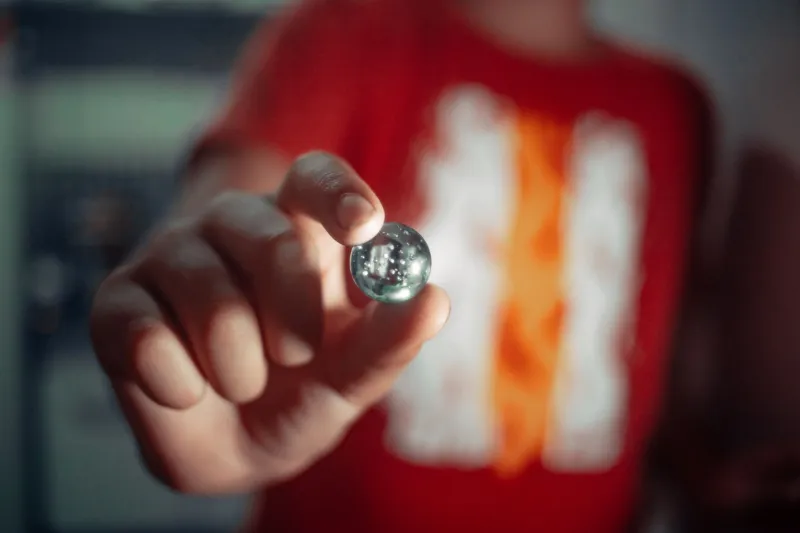
It also gives me a way to build a sequence. I am not just making one portrait. I am making a small visual story: the person, the person with the object, the object in their hands, a detail of the wear and tear, a wider frame that shows the space between them. When those images sit together in a gallery, they read like a scene rather than a lineup.
Posing around the object without making it a still life
The biggest risk is letting the object take over. I have seen sessions where the thing becomes the star and the person becomes a background extra. That is not the goal. The object should be a collaborator, not the lead actor.
My rule is simple: the person stays primary. I want the object to explain something about them, not replace them. That means I keep the face in the frame, I watch the eyes, and I do not spend twenty minutes photographing a recipe card on a table while the client sits in the corner wondering why they drove here.
The object does change posing, though. A guitar pick lives in a thumb and forefinger, close to the body. A recipe card wants both hands and a slight tilt toward the chest. A child's drawing needs gentle edges, not a death grip. A tool or a medal can be held lower, almost casually, so it feels like part of the person's posture rather than a prize being presented.
I also look for micro-actions. Thumbing the edge of the card. Turning the pick over. Smoothing the paper. Holding the object against a sleeve. These small movements keep the session from freezing into a pose. They give me frames that feel alive without asking the client to act.
Lighting texture, hands, and history
Objects are usually textured, and texture likes side light. I will often place the client near a window and let the light come across the hands and the object rather than straight into the face. That gives the skin and the material some shape. If the object is reflective, like a medal or a glass bottle, I watch for hotspots and adjust the angle instead of blasting it with direct light.
Depth of field is a negotiation. I want the eyes sharp, the hands sharp enough, and the object readable. Shooting wide open at f/1.4 sounds romantic until the recipe card is a creamy blur and the client's favorite detail is gone. I will usually stop down a little, especially for closer frames, and then make a separate detail image where the object can have the spotlight.
I also pay attention to color. A faded recipe card, a dark guitar pick, and a bright child's drawing all behave differently against clothing and walls. I ask clients to avoid loud patterns if they can, but I am not going to make them buy a new wardrobe for a piece of paper. We solve it with framing, light, and a little patience.
The conversation is part of the portrait
Some of the best frames happen while the client is talking and not looking at me. I will ask questions that do not require a camera-ready answer: What would the person who gave this to you say if they saw you holding it right now? Where do you keep it when you are not trying to impress anyone? What is the most boring thing about it?
The boring question is surprisingly useful. It gets a laugh, and laughter loosens the jaw. It also reminds everyone that this is not a solemn monument. It is a portrait session. We are allowed to enjoy it.
A story, not a headshot with a souvenir
When the session is over, I deliver the object images as a set, not as an afterthought. The wide frame gives context. The medium frame shows the relationship. The detail frame rewards the person who knows why that scuff mark matters. Together they feel like a visual story, and that is the point.
A standard headshot says, This is what I look like. An object portrait says, This is what I carry. Both are useful. But the second one is a lot more fun to make, and it is usually the one clients send to the people who actually know them.