Your Phone Already Got It. Here's What It Didn't Get.
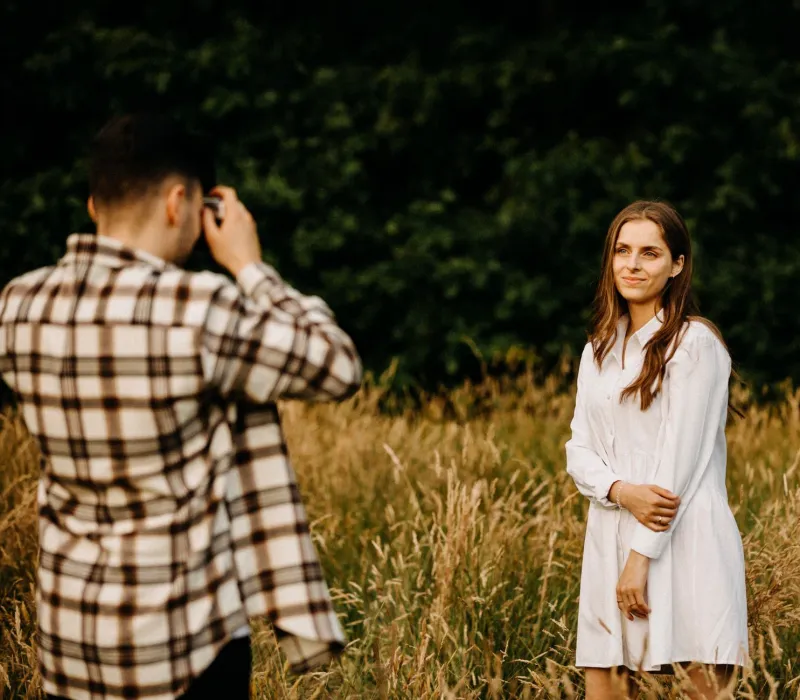
I was at a backyard anniversary party in Northern Virginia last month, and a guest took a genuinely beautiful photo of the couple on her phone. Good light, clean background, real smiles. She showed it to me like she was apologizing. 'I know it's not what you'd do,' she said.
Honestly? It was a nice picture. And it also wasn't the picture the couple hired anyone for, because the picture they needed was the one with both grandmothers in it, taken from the porch, at the moment the toast started.
That gap is the whole conversation. Not 'phone bad.' Not 'photographer threatened.' Just: these are two different tools doing two different jobs, and the confusion between them has gotten expensive for clients.
Let's Give the Phone Its Due
Phone cameras in 2026 are remarkable. Computational processing means a phone nails a dinner plate, a sunset, a new puppy, and a selfie in a dim restaurant far better than a dedicated camera from a decade ago would have. AI-assisted editing has closed even more of the gap — skin smoothing, exposure rescue, background cleanup, all in about four seconds.
If your goal is 'a good picture of this right now,' your phone is probably the correct call, and I'll say that to clients directly. Paying a professional to photograph a Tuesday taco night is a waste of everyone's money.
A Phone Is Built to Win the Frame, Not the Day
Here's the honest limitation: a phone optimizes for the single image in front of you. It has no idea what happened four minutes ago or what's about to happen in four minutes, and that context is what makes a set of photos feel like a memory instead of a feed.
Three practical things phones still can't do without a human behind them:
Anticipate. The good frame at a wedding is usually half a second before the obvious one. A parent's face during the toast, not after. The bride's hand finding her sister's. A phone user reacts; a photographer is waiting.
Move the light. Not chase it — move it. Reflectors, position changes, a slight step to the left. You can't relocate a window with a portrait mode slider.
Cover a room. One person at a table sees one table. A professional working a reception sees the whole floor and knows the order of events well enough to be in three places on time.
Add AI sharpening and generative fill to a photo taken from the wrong spot, and you get a technically cleaner version of the wrong spot. Editing fixes pixels. It doesn't fix decisions.
Three Situations, Three Different Verdicts
I get asked 'do we even need a photographer?' a lot, so here's how I actually answer it.
A casual birthday dinner with eight people. Phone. Genuinely. Someone will get the group, the cake moment, and the baby with frosting on her face. Save the money.
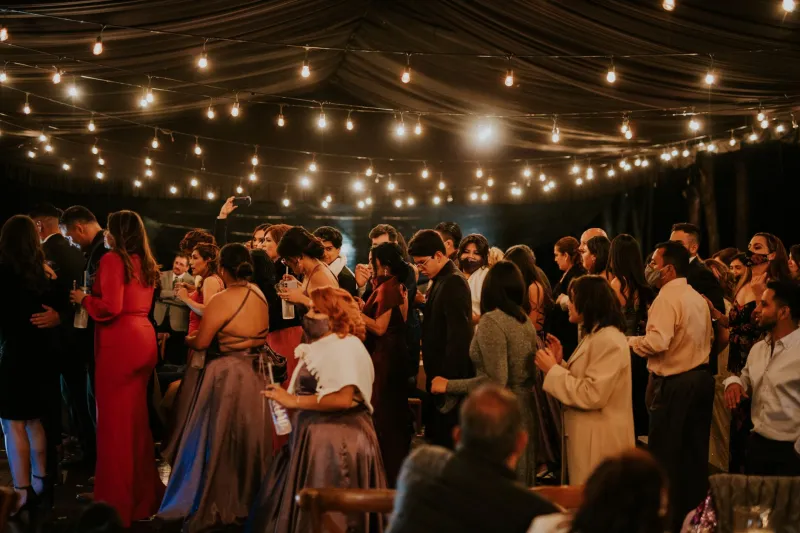
A milestone party with forty guests in a rented hall. Hire. Not because phones take bad photos, but because the moments that matter — the toast, the surprise guest, the ninety-year-old great-aunt dancing — happen simultaneously in different corners of the room. You cannot attend your own party and document it.
Anything with one chance. A wedding, an engagement, a baby's first birthday, a military homecoming, a grandparent's last big family gathering. One chance is precisely the situation where convenience loses to judgment every time.
The Part Clients Don't See on the Invoice
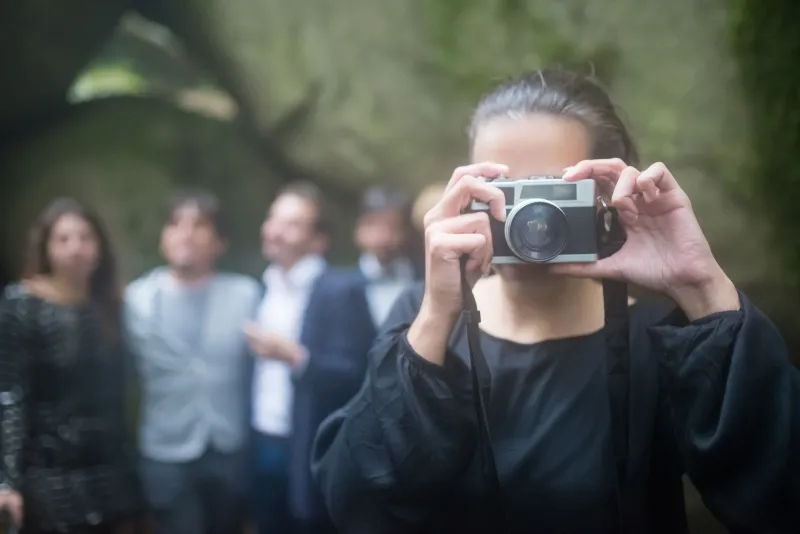
People assume they're paying for a camera. The camera is the cheapest part of what I bring. The expensive parts are the four hours scouting a venue in the wrong season, the two-minute read on where the light will be at 6:40 p.m., the backup card, the second body, the quiet conversation that gets a stiff subject to relax, and the discipline to shoot a hundred frames of the same moment because one of them will have everyone's eyes open.
You can't download that. You can't prompt it. It's the part of the job that happened before you arrived.
For Photographers: Make the Case Without the Chip on Your Shoulder
This is where our industry gets it wrong. Complaining about phones reads as fear, and clients can smell it. If your pitch is 'you need me because your phone is bad,' you've already lost, because their phone is not bad and they know it.
What works instead:
- Concede the obvious. Say the phone is great for the everyday stuff that doesn't need coverage. Refusing to admit that makes you look like you're selling something.
- Sell the set, not the shot. Show a full gallery from an event and walk the client through the sequence. The value is the narrative arc, not a hero image.
- Talk about one-chance moments. Ask what happens if the only person with a camera that night is also a guest, a parent, or in the wedding party.
- Name the deliverable. Backups, a timeline, a contract, edited files in a week, prints that hold up on a wall. Convenience has an expiration date; an archive doesn't.
A Simple Test for Clients
Before you decide, ask yourself one question: if the best photo of this day doesn't happen, can we do it again?
If the answer is yes, use your phone, enjoy the party, and skip the invoice. If the answer is no, that's the day to bring someone whose entire job is to be watching when you're busy living it.
That's not a sales pitch. It's just an accurate description of what the two tools are for.