The Loop That Makes the Room Go Quiet: A Same-Night Candid Slideshow Workflow
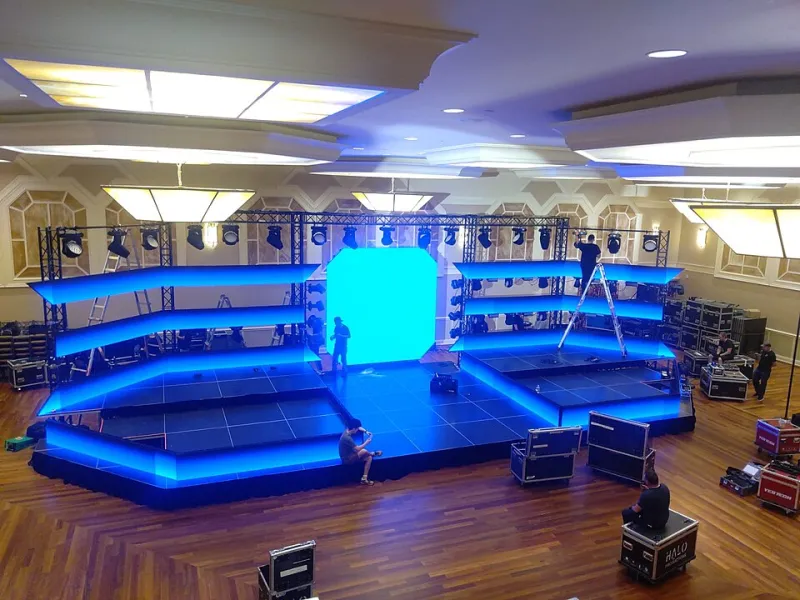
Photo: VSFep, CC BY 4.0, via Wikimedia Commons
There is a moment at a good event when the room changes. People stop checking their phones, a few heads turn toward a screen, and someone laughs at a photo of themselves before they can stop it. That is the same-night slideshow doing its job. Not as a gimmick, and not as a replacement for the final gallery, but as a live proof that the candid coverage was worth having in the room.
I like the same-night loop because it shifts how clients value event photography. A final gallery arrives weeks later, when the adrenaline is gone. A slideshow lands while the dance floor is still warm and the stories are still fresh. Guests see the coverage happening. They understand that the photographer was not just collecting podium shots. That changes the conversation after delivery, and it often changes what clients book next time.
The trick is building the loop without turning yourself into a full-time AV tech. Here is the workflow I use.
Build the cull before the event starts
A same-night slideshow lives or dies on the cull. You cannot scroll through hundreds of images at dessert and hope for the best. I set up the import and sorting before the event begins: a dedicated folder, a fast viewer, and a simple rating system. My first pass is not about finding the best photos. It is about eliminating the obvious nos: blinks, mid-chew frames, awkward expressions, bathroom-door backgrounds, and anything that makes a guest feel exposed rather than celebrated.
The second pass is where the loop takes shape. I look for moments with a little air around them: a toast laugh, a hand on a shoulder, a kid peeking around a table, a couple caught in the hallway light. I do not need the twenty best photos of the night. I need a rhythm. Forty to sixty frames is usually enough for a loop that feels alive without becoming wallpaper.
Export small. For projection, 1920 pixels on the long edge is plenty. Use sRGB, name the files in sequence, and put them in one folder. The goal is a clean playlist, not a second edit.
Test the room before you need it
Projection problems are boring until they are urgent. I ask the venue or AV contact three questions before the event: where is the screen, who controls the source, and when can I test it. If there is no screen, I bring a small projector and a clean wall. If there is a screen, I bring my own HDMI cable and adapter anyway. Venues are generous with promises and stingy with dongles.
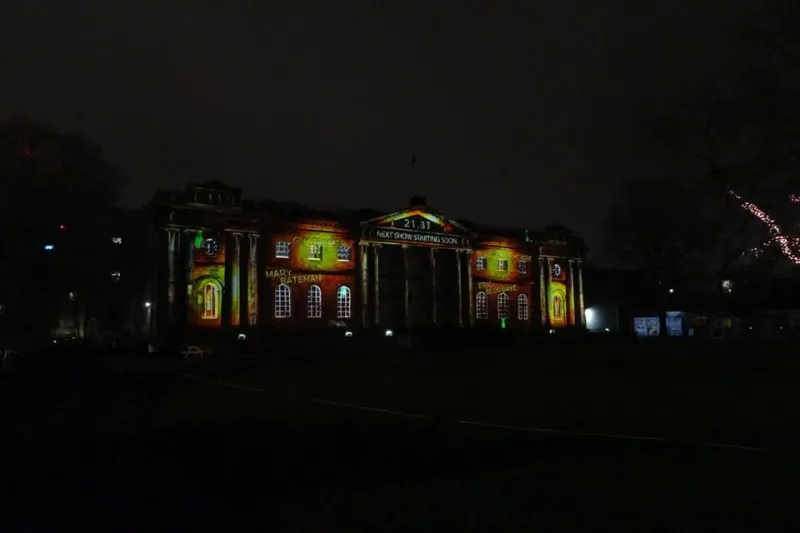
I test the actual file type, the actual resolution, and the actual room light. A slideshow that looks rich on a laptop can look washed out under ballroom chandeliers. I also set the player to loop, disable any file names or folder overlays, and make sure the cursor is not parked in the middle of the screen. If the player has a black frame between images, I test that too. A slow crossfade feels warmer than a hard cut, but only if the system can handle it without stuttering.
One more thing: bring a black slide as your first and last frame. It gives you a clean start and a graceful exit if you need to stop the loop for a speech.
Time the room light, not just the schedule
Same-night slideshows work best when the room is transitioning. For a typical US wedding or gala, that is after the entree and before dessert, or during the lull before open dancing. People are seated, the lights are still low enough for a screen to read, and nobody has committed to the dance floor yet. If you wait until the band starts, you are competing with a light show. If you start during cocktail hour, guests are still moving and the screen becomes furniture.
I coordinate with the DJ, planner, or venue captain rather than guessing. A simple heads-up works: I am going to run a short loop of tonight's photos around dessert. If there is a toast or a formal moment, I hold it. The slideshow should feel like a gift to the room, not an interruption to the run of show.
Do the privacy pass in the same breath as the edit
This is the part that does not get enough attention. A same-night loop is public within the room, so it needs a public-facing check. I keep a short list of guests who have asked not to be photographed, and I watch for frames that are technically fine but socially off: a crying child, a wardrobe malfunction, a heated conversation, a name badge that should not be readable, or anything that turns a private moment into a punchline.
I also avoid photos that identify the venue's back-of-house staff in unflattering ways. Candids are candids, but the slideshow is curated. The standard is simple: if the person in the frame would feel ambushed seeing it on a wall with two hundred people nearby, it does not go in the loop. That is not censorship. It is hospitality.
Let the loop do its quiet work
Once the slideshow is running, I step away from it. I do not stand by the projector explaining the edit. I go back to shooting. The loop should feel like part of the room, not a portfolio review. I check it once or twice for technical issues, then let guests discover it.
The payoff is usually subtle. A guest asks for the photographer's card because they saw a candid of their parents laughing. A planner notices that the coverage feels warm rather than invasive. A client says, I did not realize you got that. That is the real value of the same-night slideshow. It does not just show off the photos. It shows off the decision to hire someone who knows how to see the room.
And then dessert comes, the loop keeps running, and the event gets one more story before the night is over.