The Frame They Keep Coming Back To: A Better Way to Run Portrait Proofing
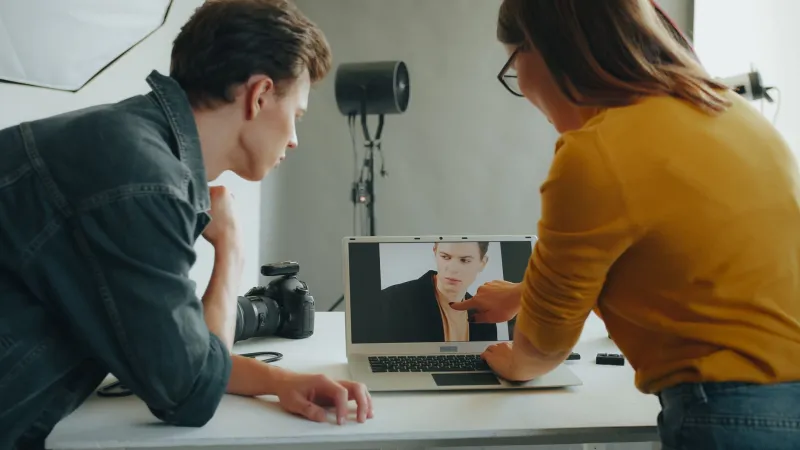
Every proofing session starts with the same quiet tension. The client is sitting at the tablet or the laptop, the gallery is open, and somewhere in their head is the idea that there is one correct choice. They are looking for the best smile, the straightest posture, the least weird hand. I get it. But after enough sessions, I have learned that the best smile is not always the picture people hang on the wall. Sometimes it is the frame they skim past on the first pass and come back to three times.
The Best Smile Is Not the Whole Face
Smiles are easy to judge and hard to trust. A big smile can be a performance, especially in a studio where someone has been told to relax for forty minutes. The frame that feels like a person often has a smaller expression: a half-smile, a raised eyebrow, a look off-camera, a laugh that got caught before it turned into a pose. I am not anti-smile. I am anti-default. When a client asks which one is best, I ask them to look at the eyes first. Then the mouth. Then the shoulders. The face is a system, not a logo.
Build a Gallery That Does Not Fight the Client
Decision fatigue is real. If I send a client eighty images and say take your time, I have handed them a homework assignment, not a portrait experience. My proofing galleries are edited down to the frames that actually have a job: the hero, the family grouping, the quiet in-between, the one that shows the location, the one that will work in black and white. I group by look or location instead of dumping everything in chronological order. I put the strongest images first, but I do not hide the oddballs. The oddballs are often the ones with the most life in them.
The Three-Question Framework
I run every client through three questions, in this order. It keeps the conversation from turning into a referendum on their chin.
Expression: Does the face tell the truth?
Not the truth about how they look. The truth about how they felt in that second. A tense jaw and a polite smile can be technically clean and emotionally empty. A relaxed mouth and a direct look can be the whole story.
Story: Does the frame remember the day?
Portraits are not just faces. They are place, weather, clothing, the way someone holds their hands when they are not thinking about it. If the frame could have been taken anywhere, it might still be beautiful, but it will not feel like theirs.
Wall Appeal: Will you still like it in five years?
This one is practical. A frame that is fun on a phone can be exhausting above a sofa. I ask clients to imagine the image at the size they are considering, in the room where it will live. If the answer is yes, great. If the answer is maybe, we keep looking.
When They Love the Frame Everyone Else Overlooks
Every few sessions, a client picks the frame I almost cut. Maybe it is the one where they are mid-laugh and slightly soft. Maybe it is the one with the dog's tail in the corner. Maybe it is the one where they are looking away and the light is doing something strange and lovely on the wall. My job is not to correct their taste. My job is to understand it. I ask what they see in it. Often they say, that is the one where I felt like myself. That is not a mistake. That is the whole point. If the frame has a technical flaw, I explain it plainly and offer an alternative. If it does not, I get out of the way.
Running the Session Without Running the Clock
I book proofing sessions for forty-five minutes, not two hours. We start with a quick pass, no talking, just gut reactions. Then we go back through the favorites and use the three questions. I keep the compare tool on a short leash because side-by-side can turn a portrait into a forensic exercise. I leave room for silence. And I end with next steps: which files are going to print, which are going in the album, and what happens next. No pressure theater. No fake urgency. Just a clear path from gallery to wall.
The Frame They Keep Coming Back To
The best proofing session does not end with the client picking the picture I would have picked. It ends with them picking the picture they will still recognize themselves in next year, and the year after that. Sometimes that is the big smile. Sometimes it is the quiet one. Sometimes it is the frame everyone else overlooked. My job is to make that choice easier, not to make it for them.