The Frames I Leave in the Room: A Working Philosophy of Event Restraint

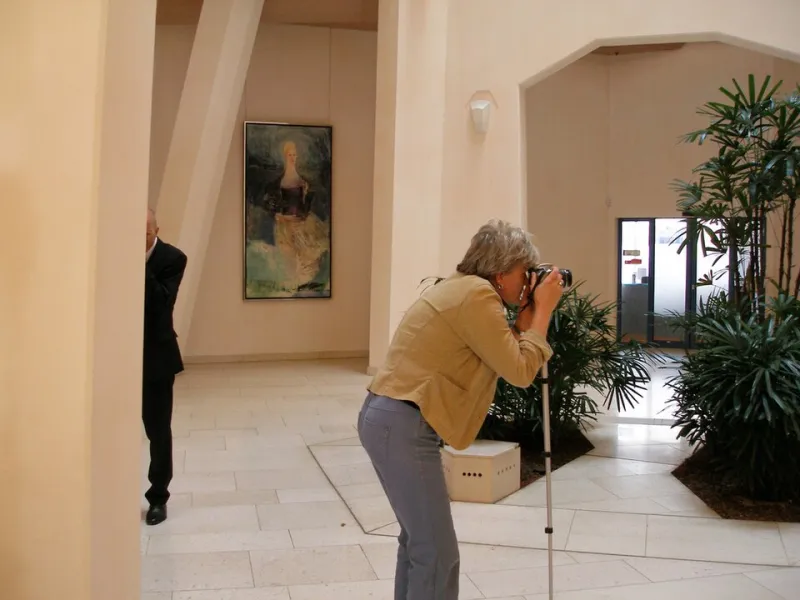
Photo: Yellowstone National Park, Public domain, via Wikimedia Commons
There is a version of event photography that treats every emotional beat like a collectible. The toast gets a frame. The tear gets a frame. The hug, the laugh, the kid losing it near the dessert table—all of it goes into the bag. I understand the instinct. You’re hired to document, and documentation can feel like accumulation. But after enough weddings, fundraisers, corporate anniversaries, and family reunions, I’ve come to believe that the strongest event coverage sometimes looks like a photographer choosing not to shoot.
That’s not a popular thing to say in a business built on delivering images. It also isn’t about being precious or mysterious. It’s a practical editorial stance: some moments are not mine to take, and some frames are better left in the room where they happened. The gallery that results from that restraint tends to feel more human, and clients notice.
The Toast Is Not a Photo Op
Reception toasts are ground zero for over-shooting. Someone stands up, raises a glass, and every camera in the room lifts. I get it—this is the part where people say meaningful things. But the meaningful thing is rarely happening on the speaker’s face. It’s happening in the reactions: a parent pressing their lips together, a friend laughing through a story they’ve heard a hundred times, a partner looking at the floor because the words landed harder than expected.
Those reactions are worth photographing. The speaker mid-sentence, mouth open, eyes half-closed under a chandelier? Usually not. I’ll take a few wide frames to establish the scene, then I’ll lower the camera and watch. If a reaction holds—really holds—I might take one frame. If it passes, I let it pass. The gallery doesn’t need twelve versions of the same emotional note. It needs the one that actually sounds like the room.
Grief Doesn’t Need a Flash
There is a line between documenting emotion and intruding on it. At memorials, celebrations of life, and even the heavier moments of otherwise happy events, that line moves fast. A person crying alone at a table is not automatically a photograph. A family huddle during a difficult speech is not automatically a photograph. Sometimes it is. Sometimes the person sees the camera and gives a small nod, and you know it’s okay. But you have to be looking for that signal, and you have to be willing to miss the shot if it doesn’t come.
I’ve come home from events with fewer images than I could have taken, and I’ve never regretted the ones I didn’t make in someone’s worst moment. What I have regretted—early in my career—is the frame that made a person feel watched instead of cared for. That feeling lingers. It changes how people move through the rest of the night, and it changes what the gallery becomes: a record of being observed rather than a record of being together.
The Private Conversation Rule
If two people are leaning in, voices low, hands touching, and the rest of the room has politely turned away, that’s a private conversation. It doesn’t matter that it’s happening in public. It doesn’t matter that I’m standing ten feet away with a long lens. I don’t take the picture.
This rule is simpler than it sounds. You can usually tell the difference between a conversation that’s private and a conversation that’s merely quiet. Private has a shape to it: shoulders angled inward, eye contact that doesn’t wander, a kind of bubble around the two people. Quiet is just low volume. If I’m unsure, I wait. If the moment opens—someone looks up, laughs, waves me over—I might step in. Otherwise, I move on. There will be another frame.
The Kid on the Floor
A child melting down at an event is not a failure of the event. It’s a Tuesday. But it’s also not a cute candid unless the family has told me otherwise. I’ll take the photo if the parents are clearly amused and inviting it, or if the kid is doing something ridiculous and everyone is laughing. If the child is genuinely upset and the parents are in triage mode, I put the camera down and sometimes ask if they need a hand. That’s not a photography decision. It’s a human one.
The same goes for anyone who’s had too much to drink, anyone mid-argument, anyone adjusting something personal. The camera can wait. The room will still be there.
How I Set Expectations Before the Event
Restraint only works if clients know it’s coming. In my pre-event conversations, I tell them plainly: I will cover the moments that matter, and I will also make judgment calls in the room. I explain that I’m not going to photograph people in distress without a clear signal, and I’m not going to chase private conversations. Most clients relax when they hear this. They don’t want a surveillance tape. They want a story.
I also ask about the non-negotiables: the grandmother who flew in, the award presentation, the specific group shot they’ve been trying to get for years. Those are the frames I protect. The rest is editorial judgment, and I’d rather make it in the room than pretend every second is equally photographable.
The Gallery That Feels Trusted
When I deliver an event gallery built with this approach, something interesting happens. Clients don’t ask why there aren’t more photos of the toast. They tell me the gallery feels warm. They tell me they forgot I was there. They tell me they saw moments they missed in real time. That’s the trade-off: fewer frames, but a stronger sense of trust. People let their guard down around a photographer who has demonstrated, over the course of an evening, that the camera is not a vacuum.
So yes, sometimes the best event coverage means lowering the camera. It means reading the room, knowing the difference between a moment and a photo opportunity, and being present enough to recognize when the kindest thing you can do is leave the frame where it is. The gallery will be better for it. The room will be better for it. And honestly, so will you.