The Quiet Signal: Giving Hands Something to Do in Portraits
Most people do not walk into a portrait session worried about their eyes. They worry about their hands. They laugh, tuck them behind their back, clasp them in front like they are waiting for a bus, and say some version of, 'I never know what to do with these.' I get it. Hands are the part of the body that have no neutral setting. Leave them alone and they fidget. Overpose them and they look like they belong to a mannequin.
After enough sessions, I stopped treating hands as an afterthought. They are not a detail. They are a quiet signal that tells the camera whether someone feels settled or braced for impact. The good news is that fixing hand tension does not require a complicated pose. It usually requires giving each hand a small, believable job.
Why Hands Read Before Faces
When someone is nervous, the hands go first. Fingers curl. Thumbs find each other. One hand grabs a wrist. The shoulders creep up, the jaw tightens, and by the time the shutter clicks, the smile is doing more work than it should. The face is trying to look relaxed while the hands are filing a complaint.
That is why I watch hands through the viewfinder the way I watch the light. If the hands look busy in a nervous way, the whole frame feels busy. If they look occupied in a natural way, the face usually follows. This is not a magic trick. It is just the body settling into a task.
The Rule I Use: One Anchor, One Accent
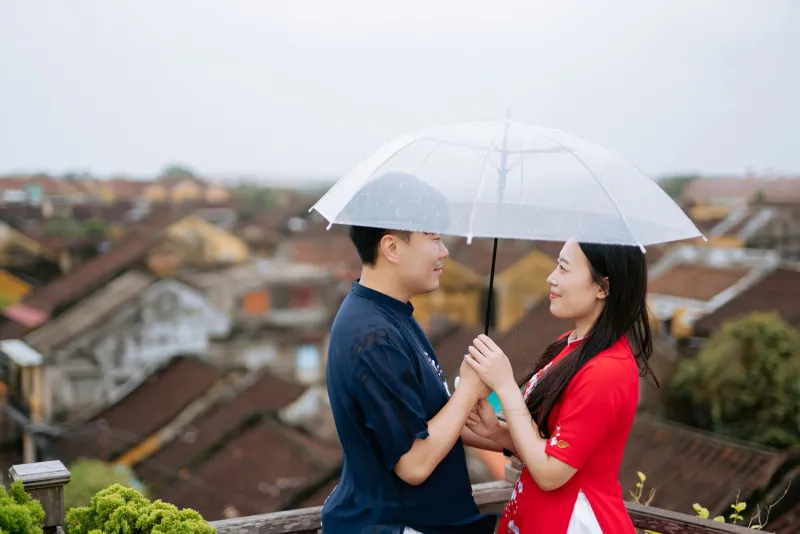
I rarely pose both hands equally. Symmetry can look stiff, especially in portraits. Instead, I give one hand an anchor and the other hand an accent. The anchor is the hand that rests, holds, or stays put. The accent is the hand that adjusts, touches, or finishes the gesture. That small imbalance is what makes a pose feel human.
I also use verbs instead of positions. 'Put your hand on your hip' can freeze someone. 'Adjust your sleeve' gives them something to do. The camera catches the moment between motions, and that moment is usually better than the held pose.
Standing Portraits: Three Prompts That Do Not Look Posed
For standing portraits, I keep it simple. The goal is soft elbows, visible hands, and no white-knuckle gripping.
The pocket plus thumb. One hand goes into a pocket, but the thumb stays out. The other hand rests at the side or lightly at a belt loop. This works for nearly everyone, and it gives the body a relaxed line without making the subject look like they are hiding.
The sleeve adjust. Ask the subject to reach across and lightly adjust the opposite cuff or sleeve. The key word is lightly. Fingertips, not a death grip. This brings one hand across the body, softens the elbows, and gives the eyes a natural place to follow.
The collar or necklace anchor. One hand comes up near a collar, lapel, or necklace. I tell clients to touch, not clutch. This is especially useful for upper-body portraits because it keeps the hands in the frame without making them the subject.
If there is a real object nearby, I use it. A jacket over the shoulder, a coffee cup, a bouquet, a bag strap. Real objects beat imaginary ones because the grip looks honest.
Seated Portraits: Let the Chair Do Some Work
Seated portraits have a hidden advantage: the chair can carry some of the pose. I often start with one forearm resting on a thigh and the other hand loose in the lap. That gives the subject a place to put their weight and keeps the hands from meeting in the middle like a closed door.
Another favorite is the elbow-on-knee prompt. One elbow rests on a knee, and the hand comes up near the jaw without pressing into the cheek. I watch for the heavy lean. A hand that smashes the face changes the shape of the face, and not in a way most clients want.
At a table, I let the table edge do the work. One hand can rest near a mug or notebook while the other stays in the lap. The point is not to stage a scene. The point is to give the hands a reason to be where they are.
Event Portraits: Fast Prompts for a Busy Room
Event portraits move fast, so the prompts have to be short. I default to one hand on a lapel, one hand holding a drink at waist level, or one hand adjusting a badge or cuff. The drink prompt comes with a warning: hold it, do not clutch it. A relaxed glass reads very differently from a lifeline.
For groups, I keep hands low and give people different small jobs. One person can rest a hand on a bag strap. Another can let a hand fall at their side. I avoid putting everyone's hands on their hips, because a row of identical poses starts to look like a corporate stock photo. Variety is what makes a group feel alive.
The Before-and-After I Show Clients
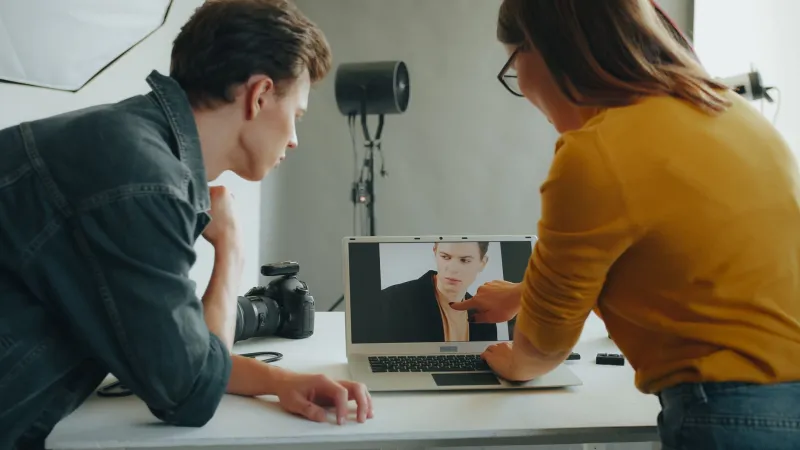
When a client tells me they hate their hands, I sometimes show them two frames on the back of the camera. In the first, their hands are clasped in front and their shoulders are up. The smile is polite, but the body looks braced. In the second, one hand is in a pocket with the thumb out and the other is resting at their side. Same light. Same face. Same person. The second frame looks like someone who is comfortable in the room.
I do not show this to prove a point about posing. I show it because it helps clients trust the process. They can see that the difference is not a new face or a new body. It is a small job for each hand.
What to Avoid, and What to Do Instead
Both hands clasped in front can look protective. Try one hand anchored and one hand relaxed.
A tight grip on a prop reads as tension. Use light contact instead.
Hands completely hidden can make a portrait feel stiff. Let at least part of one hand show.
Symmetrical hands on hips can feel like a headshot cliché. Use asymmetry instead.
Fidgeting with a ring or hair is fine for a moment, but not as a loop. Give the hand a beginning and an end.
The Cue That Fixes Most Hand Trouble
My favorite cue is simple: 'Exhale, then let your hands finish the sentence.' It sounds a little strange, but it works. People stop holding their hands and start using them. I take the frame during the motion, not after the pose has been locked in.
If a client still feels awkward, I give them permission to be awkward. A real laugh with unsure hands is better than a frozen smile with perfect ones. Hands are not a problem to solve. They are part of the story. Give them something small to do, and the rest of the portrait usually settles right in.