Three Frames, One Face: The Portrait Set That Works From LinkedIn to the Stage
Most people book a headshot the way they book a haircut: one appointment, one look, one file they hope will somehow work everywhere. Then the speaker page wants something horizontal, the press kit needs a little breathing room, and the About page would rather show them in their actual element than against a gray seamless. Suddenly that one great square crop is doing a lot of heavy lifting.
A headshot is not a brand. It is one note. A small, intentional portrait set gives you a chord—still recognizably you, but with enough range to fit the room you are walking into. The goal is not a modeling portfolio. It is a practical image kit you can use for years.
Start With the Jobs, Not the Poses
Before we talk wardrobe or locations, list where the photos will actually live. LinkedIn. A company bio. A conference speaker page. A podcast guest graphic. A press kit. An About page. Maybe a pitch deck or a byline photo. Each of those places asks for something slightly different, and knowing that up front keeps a portrait session from turning into a random pile of pretty frames.
I like to plan around three portraits: the anchor, the working portrait, and the environmental portrait. Three is enough to show range without creating a consistency problem. It is also enough to get through in one session without changing clothes six times and losing the good light.
Frame One: The Anchor Portrait
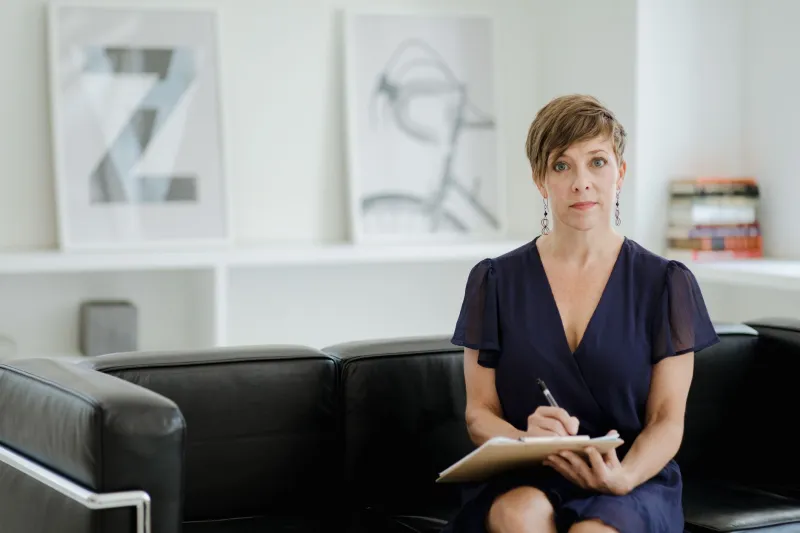
The anchor portrait is the one people will see first and remember longest. It should be clean, direct, and unmistakably you. Think of it as the home base for every other image.
This is usually a tight-ish crop—head and shoulders—with an expression that reads as approachable but not overly performed. The background should stay quiet: a soft studio backdrop, a clean wall, or a gently blurred outdoor setting. The anchor does not need to be boring. It just needs to be clear.
For most US entrepreneurs and executives, this is the LinkedIn photo, the press contact photo, and the safe choice for any outlet that wants a standard headshot. If someone only sees this one frame, they should still get an accurate read on your energy.
Frame Two: The Working Portrait
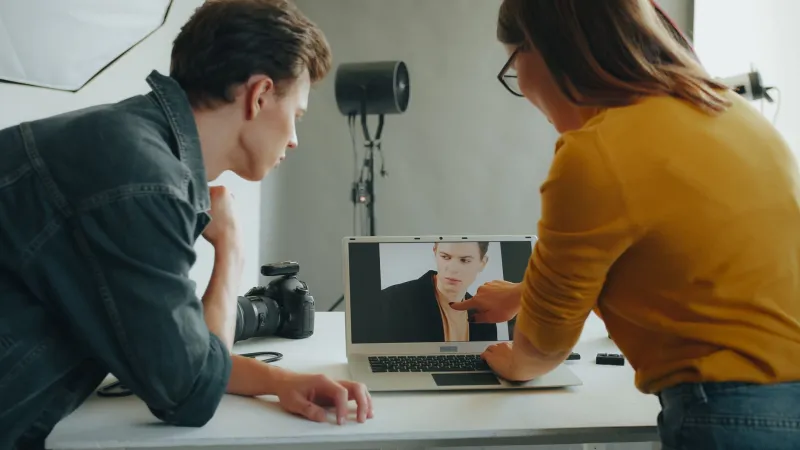
The working portrait loosens the collar a little. This is where we show how you operate: seated at a desk, standing near a window, mid-conversation, hands in use. It can be a three-quarter crop or a wider waist-up frame, and it can include a hint of your work—a notebook, a laptop, a camera, a product, a workspace—without becoming a prop closet.
The working portrait is the one that tends to fit speaker pages, podcast graphics, and About sections. It says, 'This is me on a Tuesday,' rather than, 'This is me at the DMV.' It also gives designers options: a vertical crop for a sidebar, a horizontal crop for a banner, and enough negative space to drop in text if needed.
Frame Three: The Environmental Portrait
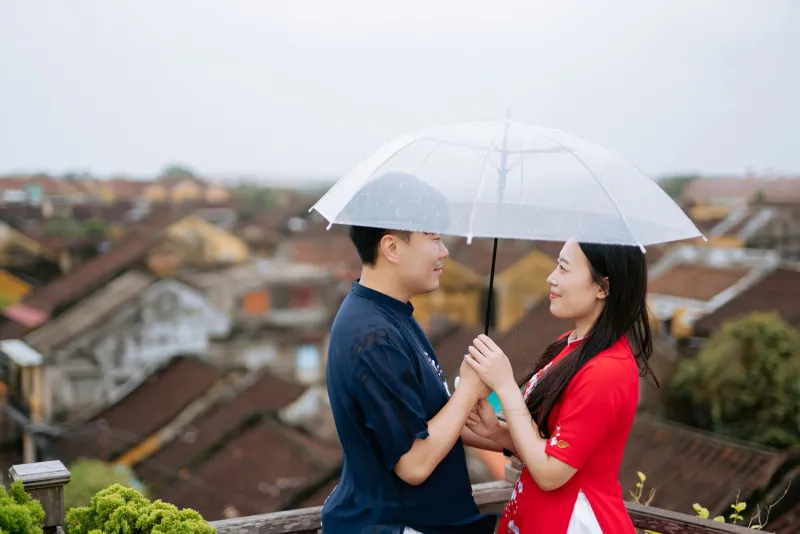
The environmental portrait is the widest and most story-driven of the set. It places you in a location that says something true about your work—a studio, an office, a workshop, a favorite neighborhood, a venue, a job site. The location does not need to be dramatic. It needs to be relevant.
This is the frame that can carry a press kit feature or a fuller About page. It gives an editor context, and it gives you a portrait that feels less like a profile photo and more like a small scene. The trick is to keep the environment from swallowing you. The place should support the person, not compete with them.
Wardrobe That Survives Three Setups
You do not need three entirely different outfits. In fact, too many wardrobe changes can make a portrait set feel like three different people showed up. Start with one base outfit that fits well and feels like you on a good day, then bring one layer or one swap that changes the tone.
A dark blazer over a simple shirt can take the anchor portrait in a more formal direction; remove the blazer and you have the working portrait. A textured sweater or a clean jacket can add interest for the environmental frame. Solid colors and simple patterns generally hold up better across backgrounds than loud prints or tiny logos. Avoid clothes with messages that will date quickly, and skip anything you have to tug, smooth, or adjust every thirty seconds.
Bring a second pair of shoes if the location involves walking. Bring a lint roller. Bring the jacket you actually like wearing, not the one you bought for interviews and never touch.
Location: One Room, Three Backgrounds
A single location can often handle all three portraits if it has a few different zones. A studio gives us a clean backdrop for the anchor, a desk or window for the working portrait, and a wider corner for the environmental frame. An office can do the same thing. Even a home studio or a co-working space can work if we can control the background and the light.
If you want outdoor images, plan the order around the sun. A shaded wall can serve as the anchor, a walkway or doorway can become the working portrait, and a wider street or landscape view can finish the set. The key is consistency: similar color palette, similar light quality, similar editing. You want the frames to look like they came from the same afternoon, not the same stock library.
Crops and Files: Plan for the Places They Will Land
This is the part people forget. Ask for crops before you need them. A square crop for LinkedIn and social profiles. A vertical crop for speaker pages and press features. A horizontal crop with negative space for banners and article headers. If you know a conference needs a specific aspect ratio, say so before the session. It is much easier to leave room in the frame than to invent room later.
I also recommend asking for both high-resolution files for print and web-sized files for quick uploads. A press kit may want a larger file. A podcast producer may want something small and easy to drop into a guest page. Having both saves everyone a follow-up email.
Consistency Is the Quiet Superpower
The magic of a portrait set is not that every image looks identical. It is that every image looks like it belongs to the same person. Keep the lighting directional and flattering across the set. Keep the color grade in the same family. Keep the retouching honest and restrained. If the anchor portrait has warm, natural skin tones, the environmental portrait should not suddenly look like a different photographer edited it on a different laptop.
Expression matters too. You do not need to smile in every frame, but you do need to look like the same human being in each one. We will shoot enough variations to find the in-between moments—the half-smile, the listening face, the direct look—so the set has options without feeling staged.
The Session Itself
A three-portrait session usually moves faster than people expect. We start with the anchor because it is the cleanest and most controlled. Then we loosen up for the working portrait and finish with the environmental frame while you are warmed up and the light is still doing what we planned. You do not need to be a natural in front of the camera. You just need to show up with a few good clothes, a rough sense of where the images will be used, and enough time to settle in.
One headshot is a snapshot. A small, well-planned set is a working tool. Build it once, build it right, and you will have portraits that can follow you from a LinkedIn search to a speaker introduction without looking like you borrowed someone else's face.