Start With the Hands: A Portrait Plan for People Who Freeze Up in Front of a Lens
Photo: Internet Archive Book Images, No restrictions, via Wikimedia Commons
Most people who say they hate being photographed don’t actually hate photographs. They hate the feeling of being watched, judged, and asked to perform a version of themselves that doesn’t exist. That distinction matters. Treat a reluctant client like a problem to be managed and you’ll get stiff shoulders and a smile that looks borrowed. Treat them like someone who needs a different set of instructions and you’ll usually get something honest.
Here’s the protocol I’ve landed on after enough sessions where the first five minutes felt like a dental appointment.
Read the room before you read the light
Reluctance shows up before anyone stands in front of the camera. Maybe they walk in with their arms crossed. Maybe they make the same joke three times — “I’m not photogenic, just so you know” — and laugh a little too hard. Maybe they keep checking their phone or ask where they should “stand” before you’ve even set a bag down.
None of that is a personality flaw. It’s anticipation. The kindest thing you can do is name it without making it weird. I’ll often say something like, “A lot of people tell me they hate this part. We’ll keep it easy and I’ll handle the technical stuff.” That single sentence does more than ten minutes of cheerful reassurance, because it tells them they don’t have to pretend to be excited.
Give them a job, not a pose
“Act natural” is the least useful direction in photography. It’s also the fastest way to make a nervous person feel like they’re failing a test they didn’t study for. Instead, hand them something concrete to do with their body.
I start with the hands almost every time. Hands give anxious people somewhere to put their attention. Adjust a cuff. Hold a coffee cup. Rest one palm on the back of a chair. Slide a hand into a pocket — but only one, or you’ll get the awkward prom-lineup stance. The goal isn’t a clever pose. The goal is to stop the internal monologue that goes, “What do I do with my arms?”
Once the hands have a job, the shoulders usually drop on their own. That’s not a trick. It’s just what happens when someone stops trying to solve a problem.
The warm-up frames nobody sees
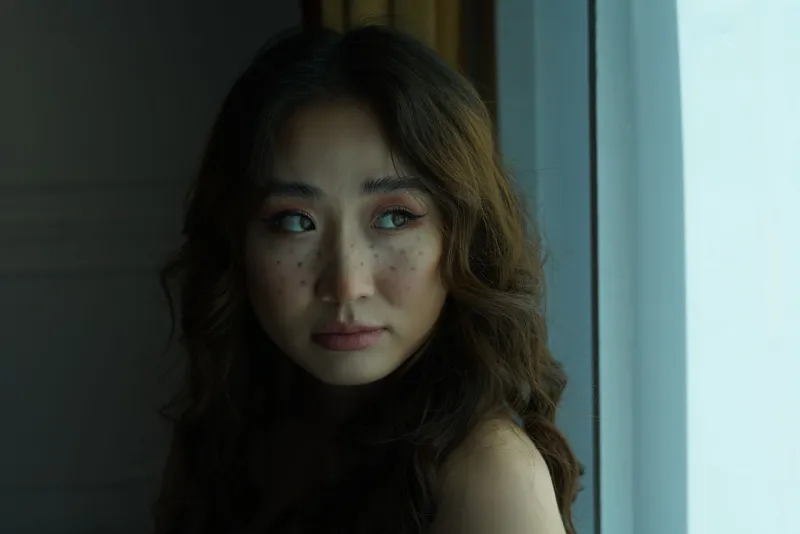
I don’t start with the money shot. I start with frames that are almost throwaways — profile turns, looking out a window, walking toward me from across the room. These are low-stakes because the client isn’t being asked to “look good.” They’re being asked to do something.
A few warm-ups I use:
- Walk toward me and tell me what you had for breakfast.
- Look at the far corner of the room like you’re waiting for someone who’s late.
- Fix your collar, then look up when I say your name.
These aren’t precious. They’re not meant to be the final selects. They’re meant to get the nervous system out of the red zone. And if one of them turns out to be great, that’s a bonus.
Build in exits and small choices
The photographer controls a lot in a session: the light, the location, the timing. For someone who already feels exposed, that can feel like a lot of power on the other side of the lens. So I hand back small pieces of control wherever I can.
“Do you want to start standing or sitting?” “Would you rather face the window or the wall?” “We can do the blazer shots now or save them for last.” These aren’t big decisions, but they remind the client that they’re a participant, not a prop. It also gives them a chance to say no to something small, which makes it easier for them to trust you with the bigger stuff.
I also build in literal exits. Water breaks. A chance to fix hair. A moment to look at the back of the camera if they ask. Reluctant clients often relax once they realize the session isn’t a hostage situation.
When to stop talking
Here’s the counterintuitive part: once someone is actually settling in, the best thing you can do is shut up. Nervous photographers fill silence with chatter. Nervous clients read that chatter as pressure.
I’ll give a direction, let them do it, and then wait. Count to five in my head. Let the fake smile fade. Let the real face show up. That’s usually when the frame happens — in the half-second after they think the photo is over. If you’re still talking, you’ll miss it.
The frames that matter come last
I save the “important” shots for the back half of the session. By then, the client has heard the shutter a hundred times. They’ve seen that you’re not going to make them do anything embarrassing. They’ve made a few small choices and survived them.
That’s when I’ll say, “Okay, now let’s get the one for the website.” Not because the earlier frames are worthless, but because the stakes are different now. They’re warmed up. They’re bored enough to be themselves. And honestly, that’s the whole game.
What to send afterward
When I deliver the gallery, I don’t just dump two hundred images and wish them luck. I’ll flag three or four frames and say, “Start here. These are the ones where you look like you.” Reluctant clients often need permission to like a photo of themselves. A little context helps them see what you saw.
The client who hates being photographed isn’t a difficult client. They’re just someone who’s used to being told to smile and hasn’t been given a better set of instructions. Give them a job, a few exits, and a little quiet, and they’ll usually surprise themselves. That’s the part of this work I never get tired of.