Ten Minutes, One Good Headshot: Running a Team Photo Day Without the Waiting-Room Gloom
Office photo day has a reputation problem. Employees hear team headshots and picture a fluorescent conference room, a line of coworkers checking their phones, and a photographer saying work with me while everyone silently works on their exit strategy. It does not have to be that way.
A good on-site portrait day is a small production with a simple goal: give every person a natural, consistent image they are not embarrassed to put on LinkedIn. Ten minutes per person is enough if the room, the schedule, and the workflow are set up before the first person walks in.
Before the day: make the calendar do the work
The best lighting setup in the world cannot save a schedule that says drop by anytime between nine and four. That creates a bottleneck, a lobby full of people, and a photographer trying to remember who has already gone.
I ask for ten-minute slots with five-minute buffers every hour. People can book through the company calendar or a shared spreadsheet, whichever is easier for the team. Each slot includes a name, department, and one note if they want it: prefers left side, will be in a navy blazer, needs a square crop for the company page. Nothing complicated.
I also send a short wardrobe note a few days ahead. Solid colors usually read better than busy patterns. Avoid logos if the images are going on a public company page. Bring a jacket or a second shirt if you want options. And please do not wear a bright green shirt if you are going to stand in front of a bright green wall. That last one sounds obvious until it happens.
Turn the conference room into a studio
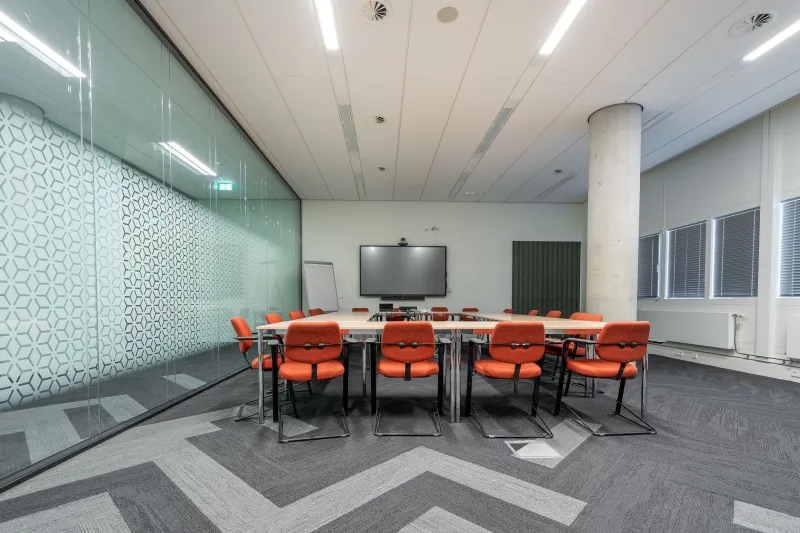
Most offices have a conference room with a blank wall, a window, and a ceiling full of lights doing their best to ruin the color balance. That is enough. I am not looking for a cathedral. I am looking for a corner I can control.
First, I clear the space. Move the table if I can. Push chairs out of the frame. Tape down cables so nobody trips on the way to their fifteen minutes of fame. If the wall is a sad beige, I either use it as a clean background or bring a collapsible backdrop. I do not try to make a beige wall look like a loft. I just make it look intentional.
The bigger job is killing the overhead fluorescents. Mixed lighting is what makes office headshots look green in the face and yellow in the collar. I turn off the ceiling lights if the building will let me, then build a simple two-light setup: a large soft source for the face and a subtle fill or rim to separate the person from the background. If I am traveling light, one window and a reflector can work, but I still flag the overheads and set a custom white balance.
I also set up a tethering station if possible. A laptop on a small table lets people see a frame before we start, which cuts down on nerves and speeds up the do I look weird? conversation. I keep the screen facing me most of the time, then turn it for a quick review at the end.
The ten-minute flow
A ten-minute slot sounds tight until you break it down. The goal is not to rush. The goal is to remove dead time.
- Minute one: settle in. Greet the person, take their bag or jacket, and ask one normal question. How is your day going? is fine. Are you ready to be famous? is not.
- Minutes two and three: wardrobe and posture check. Collar straight, hair where they want it, sleeves adjusted. I ask them to stand at a slight angle, drop their shoulders, and take a breath. If they have glasses, we check for glare before we shoot, not after.
- Minutes four through eight: photograph. I start with a relaxed frame, then a slight turn, then a more formal option if they need one. I talk through most of it so the silence does not get weird. I show one or two frames on the laptop if they look nervous.
- Minute nine: quick review. We pick a favorite direction, not a favorite image. Do you like the warmer smile or the more serious one? is easier to answer than Which of these forty pictures is good?
- Minute ten: reset for the next person. Card check, background check, chair back where it belongs.
Posing guidance that works for people who hate posing
Most people do not need a complicated pose. They need a few clear instructions and permission to stop performing.
I use a simple sequence. Stand with your weight on one foot. Turn your body about thirty degrees away from the camera. Bring your chin slightly toward the camera, not up. Let your arms hang, then bring one hand to rest at your side or in a pocket. If you have a jacket, use the lapel. If you have a folder or a coffee cup, put it down. We are not doing a catalog shoot for office supplies.
I also give people a job. Think about the last time a project actually went smoothly. Imagine you are explaining your job to a friend at a barbecue. A small mental task gives the face something to do besides waiting for the shutter.
And I keep the language neutral. Not everyone wants to be told to smile bigger. Not everyone wants to look serious. I ask what the image is for: LinkedIn, the company website, a speaker bio, the internal directory. That answer usually tells us which frame is the keeper.
Consistency is the quiet deliverable
A team photo day is not just a bunch of individual portraits. It is a set. Consistency matters more than variety. I keep the same lens, the same crop ratio, the same background, and the same lighting setup for the whole day. I shoot a test frame at the start and check it after every few people. If the sun moves or someone bumps a light stand, I fix it before the next slot.
Retouching stays light. I clean up temporary blemishes, stray hairs, and clothing wrinkles. I do not shave ten years off someone's face or change their skin tone. The goal is a good day, not a different person.
Deliver a gallery people will actually use
The delivery is part of the job. I name files clearly, separate the selects into a folder for LinkedIn squares and another for horizontal company-page crops, and include a one-page guide with suggested crops. If the company has a brand team, I ask for their specs before the shoot so I am not delivering the wrong aspect ratio a week later.
I also set a delivery deadline and stick to it. A headshot that arrives three weeks after the photo day is a headshot that gets forgotten. A clean gallery, a simple naming system, and a short usage note turn a conference-room chore into an actual resource.
That is the whole system. Control the room, protect the schedule, keep the instructions simple, and deliver images people are happy to use. Ten minutes is enough when the day is built around the people in it.