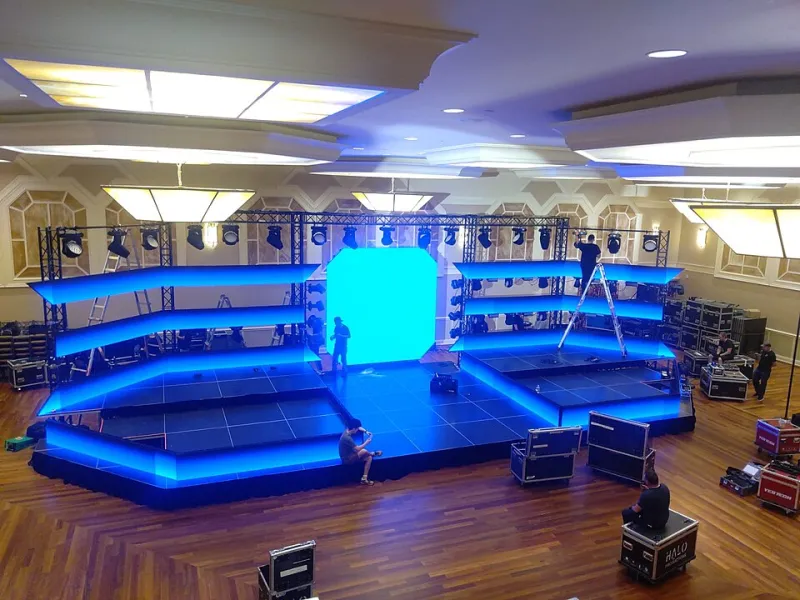
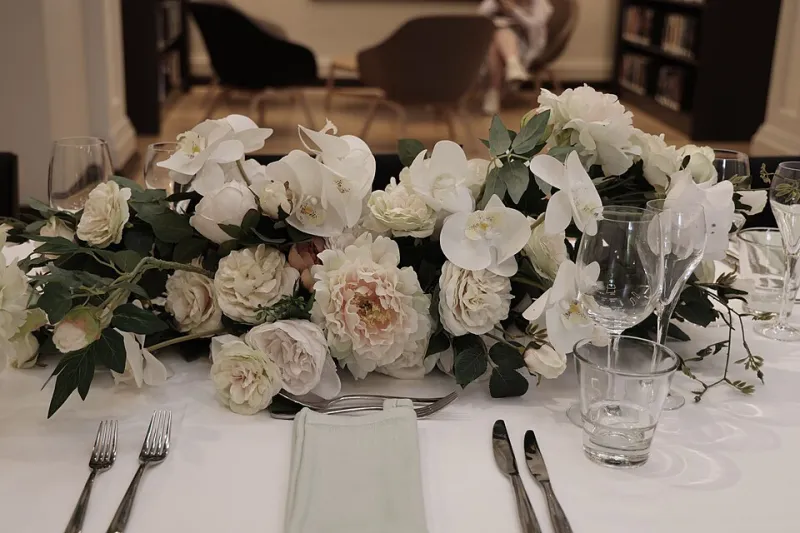
The Room Has Makers: A Case for Vendor Portraits During Event Coverage
Photo: The U.S. National Archives, Public domain, via Wikimedia Commons
Most event galleries tell one story: the guests. The couple, the honoree, the team celebrating a launch. That is the job, and I am not arguing with it. But after enough weddings, galas, and company parties, I started noticing a second story running underneath the first one. The florist wrestling a hydrangea into place. The caterer checking a tray under the heat lamp. The DJ crouched behind a laptop, reading the room before the room knows it is being read.
Those people are not background scenery. They are small-business owners, and most of them have terrible photos of themselves at work. That is the gap I want to talk about.
The vendor portrait nobody asks for
A planner I worked with a few years back told me she had been at more than two hundred events and had exactly one usable photo of herself on site. One. It was taken on a phone by a client, and half her face was behind a centerpiece. She used it anyway because it was all she had.
That stuck with me. Vendors are often the most visually interesting people in the room. They are in motion, they are good with their hands, and they are surrounded by the evidence of their craft. But event coverage tends to treat them as logistics. They get a few candid frames in the background, usually while looking stressed, and then they disappear from the gallery.
A small vendor portrait set fixes that. Not a full branding session. Not an hour-long production. Ten focused minutes, six to ten good frames, delivered quickly. It is a modest investment of time that pays off in goodwill, referrals, and the kind of quiet reputation that keeps a calendar full.
Find the pocket, not the peak
The trick is timing. Vendors are busiest when guests are busiest, so do not walk up to a caterer during dinner service and ask for a portrait. That is how you get a polite yes and a rushed photo that helps nobody.
I look for three windows:
- Setup: The room is coming together, but the vendor is still in control of their space. This is often the best light and the calmest energy.
- The lull: After the first rush, before the next one. Caterers, DJs, and planners usually have a ten-minute pocket where they are monitoring rather than sprinting.
- The wind-down: After the last guest leaves, before the venue crew starts stacking chairs. Vendors are tired, but they are also done, and sometimes that makes for a more honest portrait.
When I approach, I keep it specific. I do not say, Hey, can I grab a photo? I say something like, I have a ten-minute gap before speeches. I would love to make three quick portraits of you at your station for your own use. No charge, no catch. That framing does two things: it shows I have thought about their schedule, and it makes clear the photos are for them, not just for my portfolio.
Use the booth, use the room
Vendor portraits do not need a studio setup. In fact, they are often better without one. The whole point is context. I want the florist with the buckets and ribbon, the caterer with the pass-through window behind them, the DJ with the glow of the booth.
That means I work with what the venue gives me. A few practical notes:
- Booth light is usually enough. DJs and lighting techs often have a wash or a practical nearby. I expose for the face and let the background fall where it wants.
- Find the bounce. A white wall, a ceiling, a nearby tablecloth. I will use a small on-camera flash bounced into whatever is available rather than dragging a softbox through a working kitchen.
- Use the station. The best environmental portrait is usually three steps from where the vendor is standing. I ask them to keep their hands busy or rest one hand on the counter. It gives the frame a natural anchor.
- Watch the overheads. Hotel ballrooms and convention centers are famous for hard downlight. I tilt chins slightly up and look for a softer angle near a wall or curtain.
- Do not rearrange the scene. If the vendor has a system, leave it alone. I move myself, not their stuff.
My shot list is simple: one clean portrait at the station, one working frame with hands in motion, and one wider environmental frame that shows the room. Three frames, maybe four if the light is doing something good. That is enough for a website header, a Google Business Profile, and a social post.
Deliver small, deliver fast
A vendor portrait set works because it is easy to use. I cull it down to the strongest six to ten images, do a light cleanup pass, and send a private gallery within a week. I include a short note granting them personal and business use, with credit appreciated but not required. That last part matters. Vendors are busy. If they have to email me to ask permission, the photos sit in a folder and never get used.
I also ask one question before I send anything: Do you want these to look like your brand, or like the event? Some vendors want the moody venue look. Others want something cleaner they can use on a services page. A quick conversation saves everyone a revision.
The referral logic is not complicated
I do not do vendor portraits because I expect a direct trade. I do it because the event world runs on relationships. The planner who has a good photo of herself at work remembers the photographer who made it easy. The caterer who finally has a decent shot for her website tells other caterers. The DJ posts the frame and tags the venue, and suddenly a venue coordinator knows my name.
It is a small kindness with a long tail. And honestly, it makes the coverage better. When vendors trust you, they stop performing for the camera and start letting you into the actual work. That is where the good frames live.
So the next time you are mapping out an event day, leave ten minutes for the people who built the room. They deserve a portrait. Your gallery will be better for it, too.